 1
 2
 3

Student Visas in Korea: D-2 vs D-4 Explained
Which visa do you need to study in Korea? A plain-English overview of the D-2 (degree) and D-4 (language training) student visas, registration after arrival, and where to check official rules.
 By CampusDown Korea5 people read this
2 min readSettling in takes time. This helps.
On this page
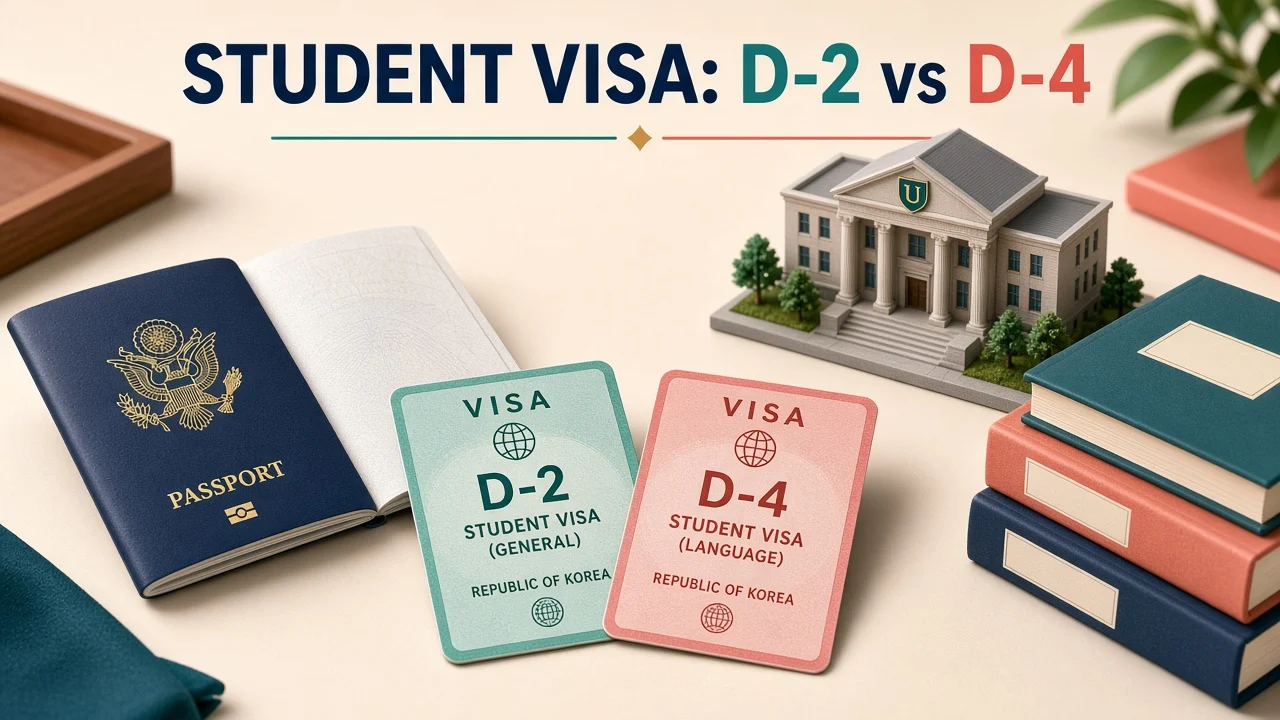
If you plan to study in Korea for longer than a short trip, you will most likely need one of two student visas: D-2 or D-4. This guide explains the difference in plain English and points you to the official sites where the current rules are published.
D-2: studying for a degree
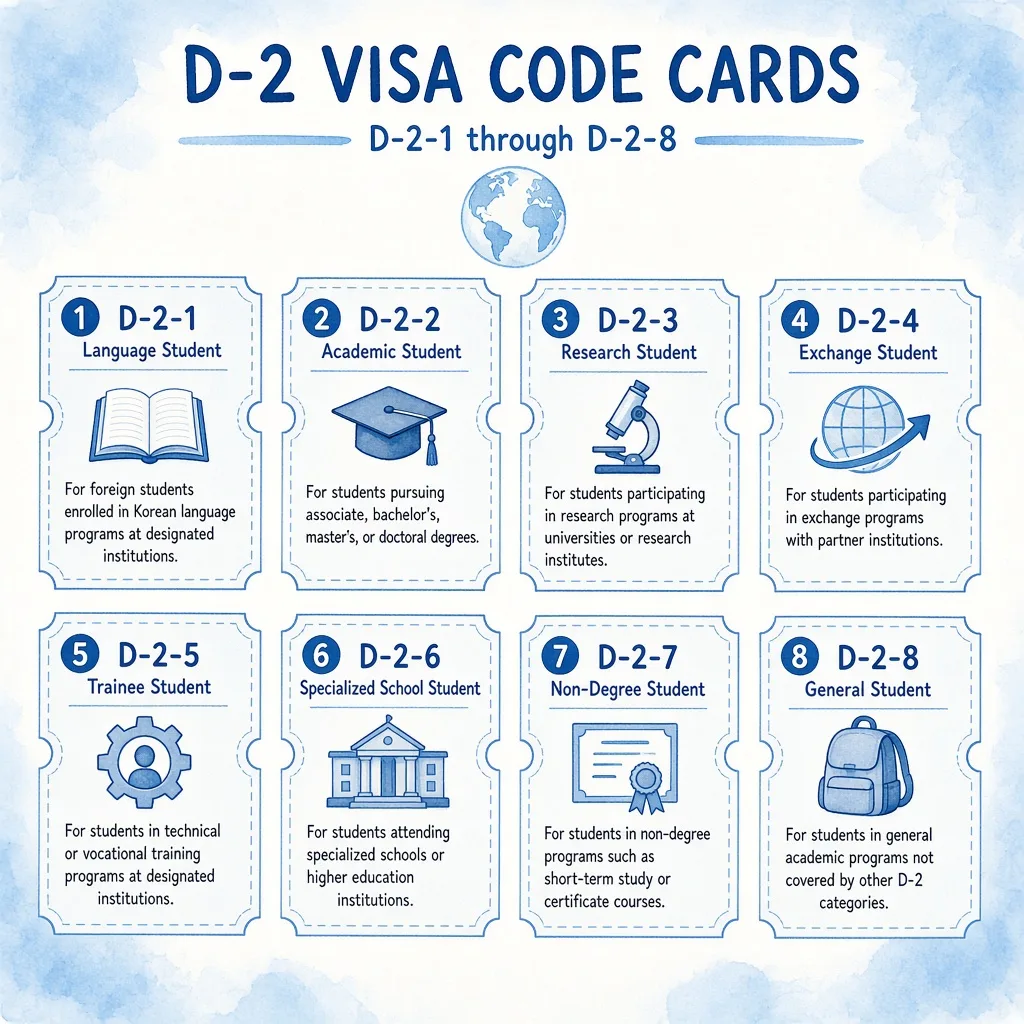
The D-2 (Student) visa is for people enrolled in a degree program at a Korean college, university or graduate school — for example an associate, bachelor's, master's or doctoral program. Exchange students and some research students at universities also fall under D-2. Your school issues the admission documents you need for the application.
D-4: Korean language training
The D-4 (General Trainee) visa covers several kinds of training. For most international students it means Korean language study at a language institute run by a university (usually listed as D-4-1). Private language academies and similar programs generally cannot sponsor this visa, so check that your program is attached to a university before you pay tuition.
Moving from D-4 to D-2
Many students learn Korean on a D-4 visa first and then start a degree. The switch is not automatic: once you have been admitted to a degree program, you apply to the immigration office for a change of status of stay. Requirements and timing are set by immigration, so ask your school's international office early.
Short courses
For very short programs (up to 90 days) a student visa is usually not needed, and people typically enter visa-free, with a K-ETA, or on a short-term visit visa, depending on nationality. Always confirm what applies to your passport.
After you arrive: register your stay
Foreigners who stay in Korea for more than 90 days must apply for alien registration (the residence card) at the immigration office in charge of where they live, within 90 days of entry. Visits are usually booked online through HiKorea. Your residence card is also what banks and mobile carriers will ask for later.
Where to check the official rules
- Korea Visa Portal — visa types, required documents and e-visa applications.
- HiKorea — immigration office reservations, registration and online applications.
- Study in Korea — the government's official guide for international students.
- Immigration Contact Center: dial 1345 (multilingual help).
Visa rules change from time to time. Treat this page as a starting point and confirm the details with your school and the official sites above before you apply.
ℹ️ This article is general information, not legal advice. Rules and procedures can change — check the official sources linked above for the latest details.
Was this worth your time?
Tap a star to rate it. One vote per reader.
No ratings yet. Be the first.
💬 Comments
- Be the first to comment.